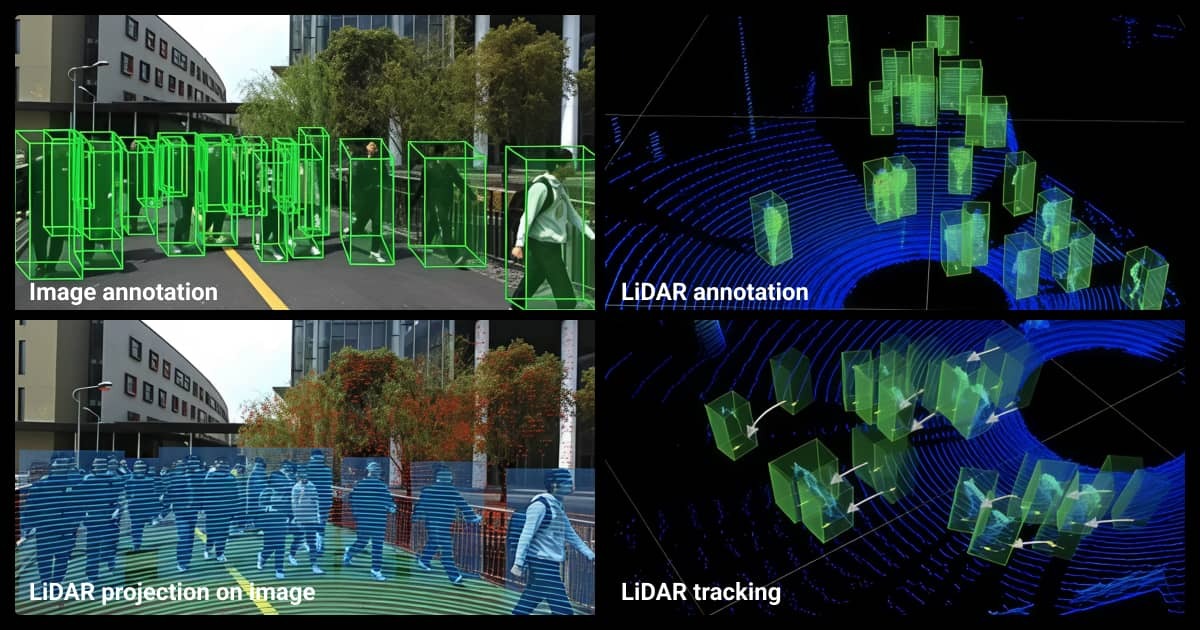
Multilingual 3D Annotation Services for AR Solutions
The rise of augmented reality (AR) is reshaping how industries deliver experiences, from education and healthcare to retail and engineering. At the heart of this transformation lies accurate data preparation. For AR tools to function seamlessly, they rely on precisely labelled digital environments. This is where multilingual 3D annotation services come into play, offering the backbone for reliable AR solutions in a global setting.
Supporting Global Communication in AR
AR experiences are no longer confined to one region or language. With businesses and institutions catering to international audiences, the demand for multilingual 3D annotation services is stronger than ever. By integrating multiple languages into annotated 3D datasets, developers can ensure that users from different cultural and linguistic backgrounds enjoy the same level of clarity.
This approach not only reduces barriers but also broadens the reach of AR applications. Whether it’s training modules for global teams, healthcare simulations in diverse regions, or retail experiences across continents, multilingual annotation ensures inclusivity.
The Role of Precision in 3D Annotation
AR tools function best when they’re built on highly detailed and accurate data. Precise 3D annotation allows AR systems to identify, interpret, and interact with digital objects in real-world settings. When these annotations are multilingual, the added dimension of linguistic accessibility makes the solutions far more versatile.
Imagine a scenario in which a medical training AR tool is being used in both Sydney and Tokyo. Without multilingual 3D annotation services, the tool may fail to deliver instructions clearly to non-English speakers. By incorporating language-specific annotations, the experience becomes universally effective, boosting both comprehension and user confidence.
Expanding AR Applications Through Multilingual Datasets
The potential of AR is enormous, but it depends heavily on well-prepared datasets. Multilingual 3D annotation services allow developers to scale their solutions without creating separate frameworks for each language. This efficiency supports faster rollouts of AR products across international markets.
In areas like tourism, this is especially valuable. AR-guided tours can provide visitors with real-time information in their preferred language. Similarly, in education, lessons can be adapted to diverse classrooms, where students may not share the same first language. These applications highlight how multilingual annotation expands AR’s capacity to inform and engage.
Bridging Cultural Contexts in AR
Language is more than just words; it carries cultural meaning. Effective multilingual 3D annotation services take cultural nuances into account, ensuring that AR experiences resonate appropriately across regions. A gesture, symbol, or object might carry one meaning in Australia but something entirely different in another country. Accurate annotation paired with cultural awareness ensures that AR remains respectful and contextually relevant.
This cultural adaptability is what allows AR solutions to succeed globally. It moves the technology beyond mere translation, embedding a deeper understanding into interactive environments.
The Future of Multilingual 3D Annotation
As AR technology continues to evolve, so too will the demand for multilingual annotation. The growth of wearable devices, immersive training platforms, and interactive retail spaces will rely on datasets that can adapt to varied languages and cultural contexts. Multilingual 3D annotation services provide the framework for this expansion, ensuring that AR remains accessible, accurate, and impactful for diverse audiences.
The global nature of technology means that inclusivity is no longer optional; it’s essential. By embracing multilingual 3D annotation, developers and industries alike can push the boundaries of AR, making it a tool that truly serves everyone.
0 Comments Add a Comment?