Understanding Keypoint Annotation Services Easily
Artificial intelligence has made significant strides in understanding and interpreting visual data, thanks to advanced techniques in data labeling. One of the most effective methods in this area is keypoint annotation, which helps machines identify and analyze specific points within images. These annotated points play a crucial role in training models to recognize patterns, track movements, and interpret human or object behavior more accurately.
What Are Keypoint Annotation Services?
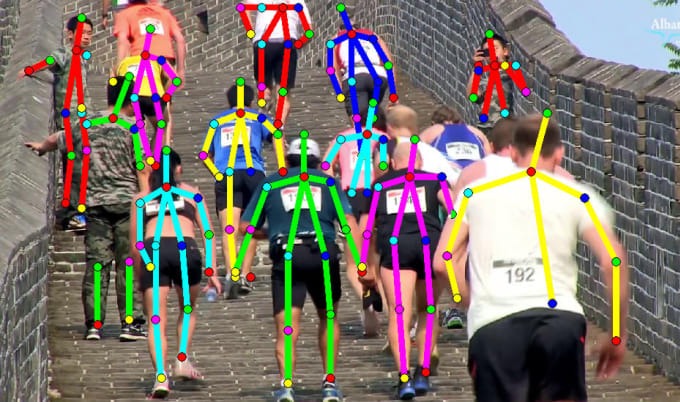
Keypoint annotation services involve marking critical points on objects or within images to highlight areas of interest. These points might represent joints in a human body, features on a face, or distinct parts of an object. By labeling such points consistently across datasets, machine learning systems can learn to detect and understand shapes, positions, and motions more effectively. This technique is essential in areas like computer vision, robotics, and medical imaging, where precision and context matter greatly.
Why Keypoint Annotation Matters
The value of keypoint annotation services lies in their ability to provide structured data for training algorithms. Machines require context to understand visual information, and keypoints act as a map that guides them. For instance, in healthcare, annotated points can assist in identifying medical conditions through posture or movement analysis. Similarly, in autonomous driving, identifying key points on pedestrians helps improve safety systems by predicting movement patterns.
Applications Across Industries
Keypoint annotation services are applied across many industries, each benefiting in unique ways. In sports, they can be used to study athletes’ movements and improve performance strategies. In manufacturing, keypoints can help monitor equipment and ensure safety by identifying mechanical irregularities. Even in entertainment, this technique contributes to motion capture for animation and gaming. The wide range of applications shows just how versatile and impactful this method is for advancing technology.
How It Supports Machine Learning Models
When training machine learning systems, the quality of labeled data often determines the accuracy of the final model. Keypoint annotation services help create datasets that are both detailed and reliable. These annotated points allow algorithms to detect fine-grained differences that might otherwise be overlooked. As the model trains on more annotated examples, its ability to generalize and make accurate predictions improves. This is especially useful in tasks like facial recognition, activity detection, and gesture-based controls.
Challenges in Keypoint Annotation
While the benefits are clear, there are also challenges to consider. Keypoint annotation requires precision and consistency, which can be time-consuming when applied to large datasets. Complex images, overlapping objects, or subtle features may increase the difficulty of accurate labeling. Ensuring that annotations are free from bias is another critical factor, as biased data can limit the effectiveness of trained models. Overcoming these challenges requires attention to detail and strong quality control processes.
The Future of Keypoint Annotation
As artificial intelligence evolves, the demand for more accurate and context-aware datasets will continue to grow. Keypoint annotation services are likely to play an even bigger role in enabling advanced systems that rely on visual understanding. From healthcare diagnostics to human-computer interaction, the possibilities are expanding rapidly. The future points toward greater efficiency, improved automation, and broader adoption across industries that value precision and data-driven insights.
Keypoint annotation services make it possible for machines to interpret images with remarkable accuracy by focusing on critical points of interest. Their role in training AI systems has already transformed industries ranging from healthcare to robotics. By understanding how these services work and the benefits they provide, it becomes easier to appreciate their importance in the development of intelligent, vision-based technologies.
0 Comments Add a Comment?